Tight Belts, Full Bellies

The Homespun Foodie’s week in review, Nov 16–22
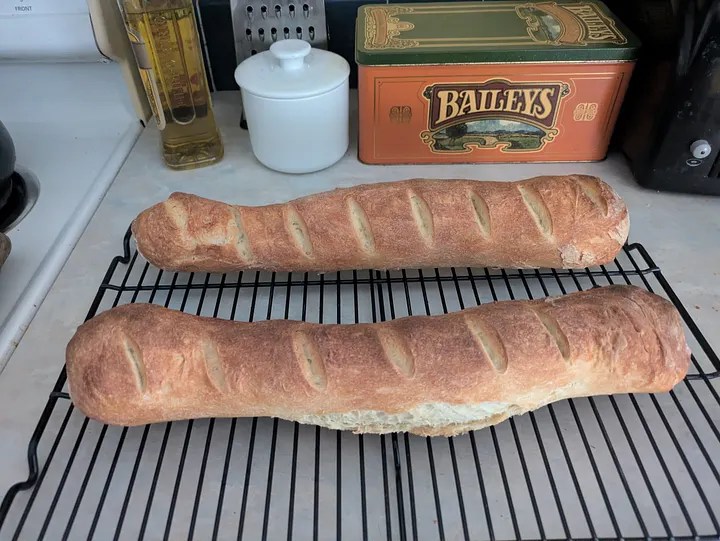
Although it is both physically and figuratively impossible for one to pull oneself up by one’s own bootstraps, it is possible to tighten one’s belt. Whether that is a good thing depends upon the individual’s need, of course. In general, though, it does all of us a bit of good to tighten our belts periodically — whether necessary or not.

When life becomes too easy for humans, we begin doing stupid things — like running monopolies, hanging out on private torture islands, and engaging in senseless cruelty against the underprivileged. I know I don’t want to begin on that path.

For many in the US, the end of November is the theoretical release of said belt, allowing it to stretch to its utmost as we stuff ourselves with good food and cheer (and, for some, a lot of shopping). Of course, this loosening of the belts often continues into December. This is why so many of us wake up on January first feeling desolate, indebted, and afraid. For the fortunate, there are credit card bills to deal with. For the less fortunate, being short on rent or another important bill may be their lot.

Well, let’s say balderdash to that! 

Continue reading for free on Medium…

My Life With Spiders

Caught In Charlotte’s Web

It is still too dark to check on her.

Last night, I watched helplessly as she rushed to bundle up her home in the failing light, as rain lashed down and the wind blew. She hadn’t quite succeeded by the time I closed the blinds, but she was huddled up in a relatively safe and protected spot.

As dawn finally breaks over the eastern ridge, I hazard a peek through the blinds. Her home is immaculate, and she is perched comfortably in the center, her head down and waiting. I see the beginning haze of a cloud of gnats rising from the stinking laurel shrub below, and I am relieved that she will not go hungry today.

I call her Charlotte, for the obvious reason that she is an orb weaver spider, and I was one of the many children in this world who cried over E.B. White’s Charlotte’s Web. Her home is a web that she has spun across the outside of my dining room window, mere feet from where I sit and write most days.

Autumn in the Pacific Northwest is aptly named “spider season” by the locals.

Continue reading on Medium for free…

Mad for Mould

A love letter to an unsung garden hero

Winter brings with it a green carpet. The November rains return in earnest to tell us winter is on her way. The grasses, dry and brown from summer heat, come alive in the cool dampness. Moss creeps over bare earth, ensuring every footstep is cushioned by emeralds.

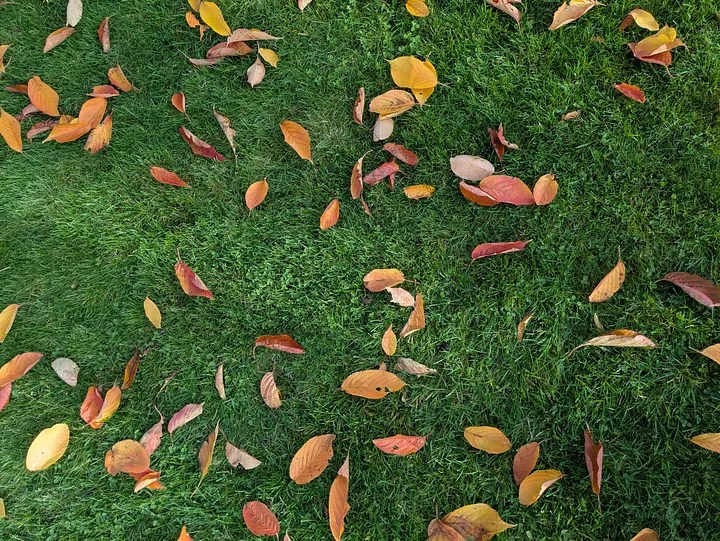
Along with the green comes the leaves, tumbling down to land like jewels upon the lawn. Yellow, red, orange, and tawny brown compete for pride of place. Those leaves that still cling to skeletal branches stand out beautifully against the cold, grey skies. It is like a treasure has been spilt upon the ground from the benevolent heavens above.

In fact, it is the lawns and not the streets that are paved in gold. For the gardener, each leaf is more valuable than one would dare imagine.

It is my task on this late November day to collect the leaves.

Continue reading for free on Medium…

Living within Your Time and Money Means

The Homespun Foodie’s week in review, Nov 9–15

We are in a lull right now, here at the always cozy Sequoia Cottage. It is a financial lull, as our income continues to hover at its lowest since 2009, and a time lull, as few outside responsibilities are tugging at me.

Having little money but plenty of time is preferred over having little money and little time, of course. With time, we can invest in those actions that make the most of small means. Whether unfortunate or not, our time will soon be in high demand, but there is no guarantee that our income will rise with it.

All is well and all will be well, though, for we are experienced at living large on little — whether that little be time or money!

One way to control working-class folk is to make their survival all-consuming. The workers can’t organize for better pay and improved conditions, for example, if their waking hours are booked full with scrambling for a few meager crusts to make ends meet. Without time, who has the energy to trace their difficulties to the feet of the elite, or to change something about it if they do?

Money-deprived folk with time revolt; money- and time-deprived folk simply struggle to survive.

Continue reading for free on Medium…

Taking the Time to Live a Longer Life

Musings from the bus stop.

The journey begins pleasantly enough. I walk down the lane, leaves crunching underfoot. First I crunch through a collection of maple leaves which are satisfyingly crispy even after yesterday’s drizzle.

Next, my feet wade into a sea of yellow heart-shaped leaves. It is the cottonwoods, whose pleasant fragrance reaches me before I see the first impossibly tall trunk. Looking up, I realize our lane winds through a copse of these giant grandmother cottonwoods. Large and wise they tower above. I have driven this lane a thousand times and never noticed them dancing alongside the pavement, ensconced as I was in an aluminum, plastic, and steel cage.

I am disappointed in myself, but also thrilled to have finally made their discovery.

Bright leaves dot the blacktop at my feet like colorful autumnal confetti. I take it all in, my head turning this way and that in an impossible effort to synthesize it all into my being.

Continue reading for free on Medium…

I Learned the Secret to Everything In Aunt Nancy’s Basement

(Some assembly required)

Aunt Nancy’s small farm house had a basement. Our cookie cutter suburban tract home had no basement. Maybe this is why I spent so many hours each summer exploring the dark crannies and nooks of this mysterious underground room.

This wasn’t the spooky basement that popular culture had prepared me for. Aunt Nancy’s basement was neat and orderly. A magical place where glittering canning jars with jewel-tone contents were stacked to the ceiling on strong wooden shelves. A place where bunches of onions and braids of garlic were tacked onto the supports for those shelves. Along the bottom, crates of winter squashes, apples, and potatoes lay nestled in protective nests of shredded newspaper and straw.

In one corner a scrap of carpet covered the floor, and atop it sat a few broken down armchairs and an old sagging couch. Stacks of board games and old magazines sat on a shelf. Dubbed “Twister Corner” by my auntie’s family, this was where we all went when funnel clouds threatened. It was also where my cousins and I played when it was too dark or too rainy to go outside.

One set of shelves in Twister Corner held something different, though.

Continue reading for free on Medium…

The Threat of Famine

The Homespun Foodie’s week in review, Nov 2–8

One would have to be a rock, rather than simply living under one, to be living in America and unaware of the threat to food access that 41 million Americans faced last week. As one whose family was somewhat affected, famine has understandably and unfortunately been on my mind.

I have not studied famine in depth, but my lay opinion is that famine comes in a few different types. There are natural famines, caused by disasters like flooding, droughts, and pestilence. There are the famines of war, which occur directly as an attack on the enemy’s food supply or indirectly as there are fewer and fewer people left on the farm to grow the food needed. And finally, there are famines of political control, where food access is prevented by the ruling elite in order to control those they see as beneath them.

The famine that was threatened last week was one primarily of political control, of that I have no doubt. Another example of such a famine would have been the Great Hunger that struck Ireland in the mid 1800s. Most Americans know it as the “Irish Potato Famine,” a horrible misnomer that was designed to relieve the perpetrators of their rightly deserved blame.

You see, the Great Hunger was in part due to a potato blight, a natural famine if you will, but why does no one ask the most obvious questions — why didn’t they eat something else?

Continue reading for free on Medium…

Pumpkins and Spice, Everything Ain’t Nice

Why can’t I love autumn?

I gaze through the square frame of my window. It makes reality into a painting of a magical world beyond my warm kitchen.

The lawn is green again, now that the summer heat is gone and the fall rains have begun again in earnest. Bright yellow pin oak leaves and rich crimson maple leaves dot the emerald lawn like candy sprinkles. The beauty is almost too much to take in at once.

Like a coven of merry witches, the evergreen cones of the giant sequoias sway in the wind as they encircle the yard. They are wise women sent to watch over us and protect us from the worst that the winter gales will bring. Before them stand the skeletal branches of maple, alder, birch, and oak. A few tattered but joyfully vibrant leaves still cling to their outstretched fingers, all the more shocking against the listless gray sky above.

I cannot deny that autumn is a time of immense beauty.

Continue reading on Medium for Free…

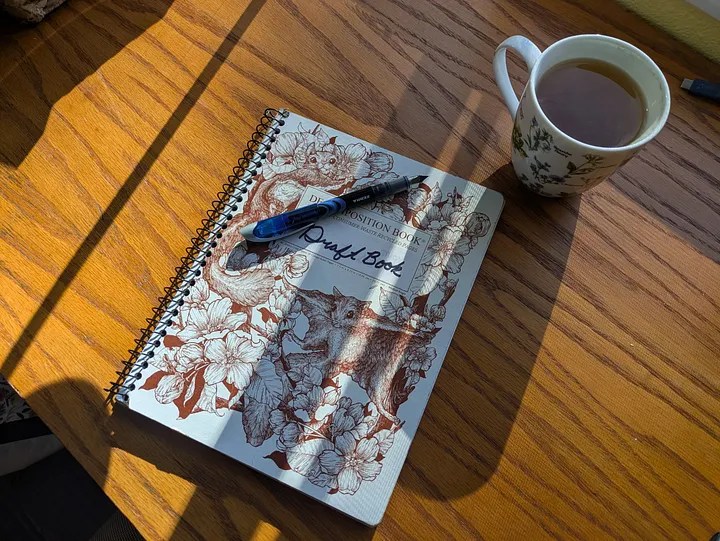
Why I Write In Analog

There is power in writing slowly

Hardwired by generations of ancestors who worked their sweat into the soil before the break of dawn, I set about my morning tasks under a still-dark sky. Unlike those that came before me, I do not work the cold ground or tend to warm beasts. No, my hands brush across smooth paper and encase the comfort of my warm pen.

It begins with three cups of coffee and then I switch to Irish breakfast tea. The steam powers my hand as it moves across the page. The blank page is my fertile field. The pen, my spade. The day has begun.

I write in analog.

No laptop. Not even a typewriter. 

Continue reading on Medium for free…

I Remember In Flowers

A mother’s love isn’t always guaranteed

The flowers are the electric yellow of margarine. These blooms are the technicolor adverts in glossy women’s magazines telling me I can hardly believe they aren’t butter.

Momma collected women’s magazines and spread them across the coffee table like a bouquet, but I never saw her read one. Momma had no time for things like reading. Instead, they collected dust until years later an adolescent me peeked inside to decipher my own womanhood.

Yellow flowers made Momma happy. Yellow was the color of the sunflowers that made Momma think of her childhood home in Kansas. Momma loved that home and Momma hated that home. Even at three years old, I knew these simple truths.

I was always wary of Momma.

Continue reading on Medium for free…